


There is an old teaching that’s been rattling around in my head lately. It goes something like this, “Hatred never ceases by hatred, but only by love, this is the eternal rule.”
It sounds almost too simple, doesn’t it? The kind of thing you would find on a fridge magnet or a motivational poster in a dentist’s waiting room. But I have been sitting with these words, and I think they contain something we desperately need to remember.
I witnessed a car accident a few weeks ago. Nothing fatal, thank God, just two vehicles crumpled at a busy intersection, glass scattered across the asphalt like spilled diamonds.
What happened next is what stayed with me.
Both drivers stumbled out, shaken but unhurt. And within seconds, they were screaming at each other. Fingers pointing. Faces red. One shoved the other. A crowd gathered, phones came out, and the whole thing spiraled into something uglier than the crash itself.
I stood there watching, and all I could think was, these two people just survived something terrifying together. For a split second, both of their lives flashed before their eyes. And instead of gratitude, instead of relief, they chose rage.
Here is the thing—by the time the police arrived, both were trembling. Not from the accident anymore, but from the adrenaline of their own anger. Neither looked better for it. Neither looked like they’d won anything.
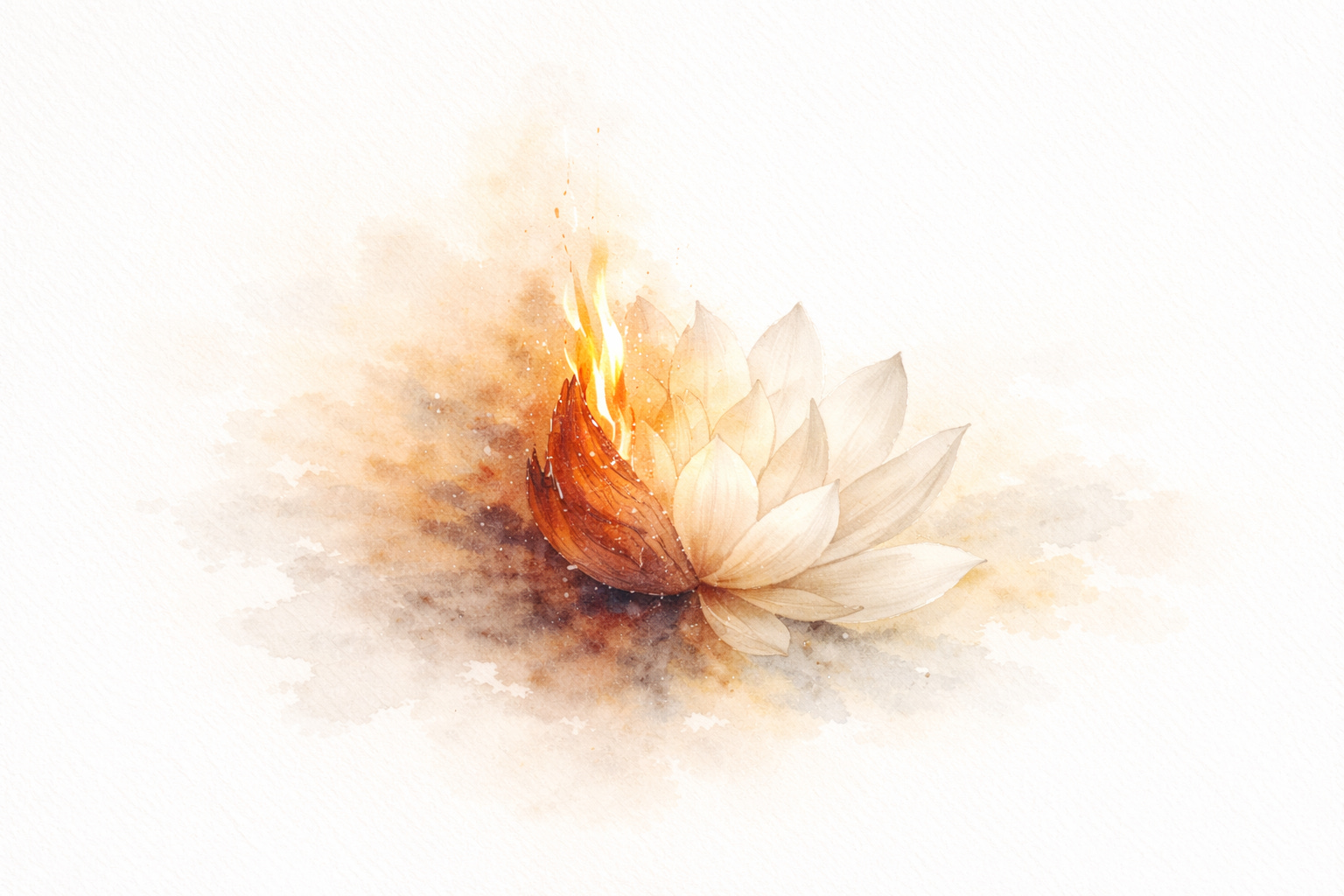
There is this image I can’t shakehatred as a burning ember you pick up to throw at someone else. The thing is, your hand burns first. And the longer you hold it, the deeper the damage goes.
We think of anger and hatred as weapons we wield against others. But they are strange weapons. They wound the wielder most of all.
I have felt this in my own life. Those moments when I have held onto a grudge, replayed an argument in my head, imagined all the things I should have said. It is exhausting. It is like drinking poison and waiting for the other person to feel sick.
But here is where it gets complicated. Because “just love people” sounds nice until you are faced with someone who has genuinely wronged you. Someone who hurt you, or worse, hurt someone you love.
I don’t think this teaching is asking us to be doormats. It is not saying that harm should go unaddressed, or that we should smile and forgive while someone is still stepping on our neck.
What I think it is pointing to is something different. It is about what we carry inside ourselves. It is about recognizing that the hatred we hold doesn’t punish anyone but us. That meeting cruelty with more cruelty just creates an endless loop, a hall of mirrors where the ugliness reflects back forever.
I keep thinking about those two drivers. What if one of them had paused? What if, instead of shouting, someone had said, “Hey, are you okay? That was scary.”
The accident would still need to be sorted out. Insurance would still be called. Maybe someone was at fault, and that would need to be addressed. But the second accident—the one they created with their words and fists—that one was optional.
That one, they chose.
Love, in this context, isn’t a feeling. It is not the warm fuzzy thing we experience when we look at puppies or our favorite person. It is more like a decision. A stance. A refusal to let someone else’s darkness extinguish your own light.
Sometimes love looks like walking away. Sometimes it looks like boundaries. Sometimes it looks like saying “I won’t let what you did to me turn me into something I am not.”
I think about this on a larger scale too. The cycles of violence we see in the world, between nations, between groups, between strangers on a roadside. Each act of hatred is justified by the one that came before it. An eye for an eye until everyone is blind.
The eternal rule isn’t just spiritual advice. It might be the only practical path forward. Because hatred, it turns out, is terrible at achieving its own goals. It doesn’t resolve anything. It just creates more of itself.
There is a quiet revolution available to each of us. Not in grand gestures, but in the small moments. In choosing not to snap back. In deciding that the anger stops with us. In recognizing that we can condemn an action without poisoning our own hearts in the process.
It is hard. I fail at it constantly. But I keep coming back to this simple idea, the only thing that can actually end the cycle is something different from what started it.
Fire can’t put out fire. Only water can do that.
So I am trying—imperfectly, inconsistently, to put down the ember. To stop burning my own hands. To remember that the hatred I carry doesn’t travel anywhere but deeper into my own bones.
Those two drivers went home that night with dented cars and bruised egos. But I wonder if the real damage was the story they will now tell themselves about the other guy, about how wronged they were, about the anger they will carry into next week, next month, maybe next year.
And maybe that’s the eternal rule. Not because someone said so. But because it’s just... true.