


There is a kind of loneliness that has nothing to do with other people.
It is the loneliness of living in a body you do not speak to. Of carrying a heart you do not listen to. Of letting the mind run wild while you stand at a distance, watching, helpless, as if it belongs to someone else.
A person can spend years like this. Decades, even. Functioning. Working. Smiling at the right moments. And all the while, the three parts of them, mind, body, and heart, live in the same house but never sit together. Never talk. Never touch.
This is the story of what happens when they finally meet again.
The Stranger in the Mirror
For a long time, a person did not know they were divided.
They thought everyone lived this way. The mind racing ahead, always planning, always solving, always somewhere else. The body ignored until it screamed loud enough to be noticed. The heart buried so deep it took extraordinary pain to feel it at all.
The Stoics speak of the self as something to be mastered. But what if the self has been abandoned, not unruly? What if the work is not control, but reunion?
Tara Brach writes about the trance we fall into, the trance of unworthiness, of separation, of believing we are broken. But the truth is simpler and sadder: we are not broken. We are just not home.
The First Step Back
It began with something small.
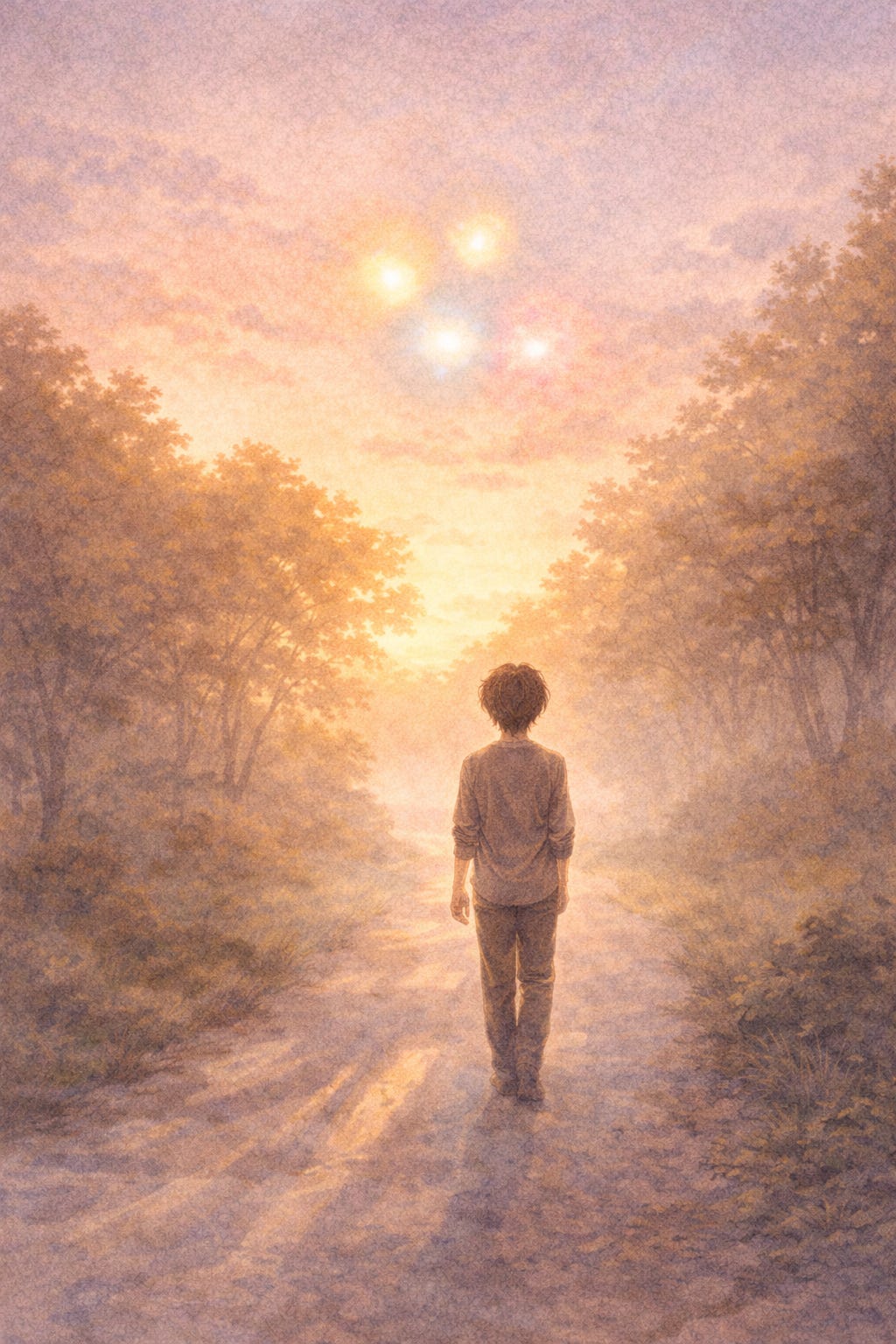
A walk. Without headphones. Without music. Without a podcast filling every corner of silence.
Just footsteps. Just breath. Just the sound of the world as it actually is.
The mind resisted. It wanted input, stimulation, something to chew on. But the person kept walking. And somewhere between one block and the next, something shifted.
The body began to speak.
Not in words. In sensations. A looseness in the shoulders that had been tight for months. A breath that went deeper than usual. A strange, unfamiliar feeling that took a moment to name.
Peace.
Not happiness. Not excitement. Just peace. The quiet kind that does not announce itself.
The Meditation Without Armor
The next morning, they sat to meditate. Again, without headphones. Without a guided voice telling them what to feel.
Twenty minutes. Just them and the breath.
The mind wandered, as minds do. Thoughts of work. Thoughts of someone they were trying not to think about. Thoughts about thoughts.
But something was different this time.
When the stress arose, when the body tensed and the lips tingled with unnamed anxiety, the person did not run. They did not open their eyes and reach for distraction.
Instead, they placed a hand on their chest. And they said, silently, to no one and to themselves:
You are not alone. We are together.
The Conversation That Changes Everything
This is the moment the reunion begins.
Not when everything is fixed. Not when the mind is silent and the heart is healed and the body is at ease. But when you turn toward yourself and say: I am here. I am not leaving.
The Buddha taught that suffering comes from separation, from the illusion that we are apart from life, from others, from ourselves. But the path back is not complicated. It is simply presence. Showing up. Again and again.
Krishna tells Arjuna in the Gita that the self is the friend of the self, and also its enemy. We choose which one we become. Every moment of turning toward ourselves is a vote for friendship. Every moment of abandonment is a vote for war.
The person sitting in meditation that morning was learning to vote differently.
The Time It Takes
Here is the truth no one tells you about healing:
The mind, body, and heart do not reunite overnight.
They have been strangers for too long. They do not trust each other yet. The mind still wants to control. The body still flinches, expecting to be ignored. The heart still hides, unsure if it is safe to come out.
But they are in the same room now. That is enough.
A person does not need to fix themselves in a single meditation, a single walk, a single day. They only need to keep showing up. Keep saying, with their presence if not their words: I know we have been apart. I know it will take time. But I am not going anywhere.
Ram walked fourteen years in exile before returning home. The Buddha sat under a tree until the morning star rose. Some reunions take time. But they happen.
The Quiet Joy
There is a joy that comes from this, but it is not loud.
It is not the joy of achievement or acquisition. It is the joy of recognition. Of looking in the mirror and seeing, perhaps for the first time, not a stranger but a friend.
A person learning to walk without armor. To sit without escape. To feel without running.
This is not the end of the journey. It is barely the beginning. But it is the most important step: the decision to come home.
From the journey of turning scars into stars.
Reflection for you, reader:
When was the last time you sat with yourself without distraction, without input, without escape?
What would you say to your body if you treated it as a friend who has been waiting for you to return?
What would it mean to stop trying to fix yourself and simply be with yourself?
A song about returning, not to a place, but to yourself. The slow, soulful ache of someone who has been away too long and is finally walking back.